




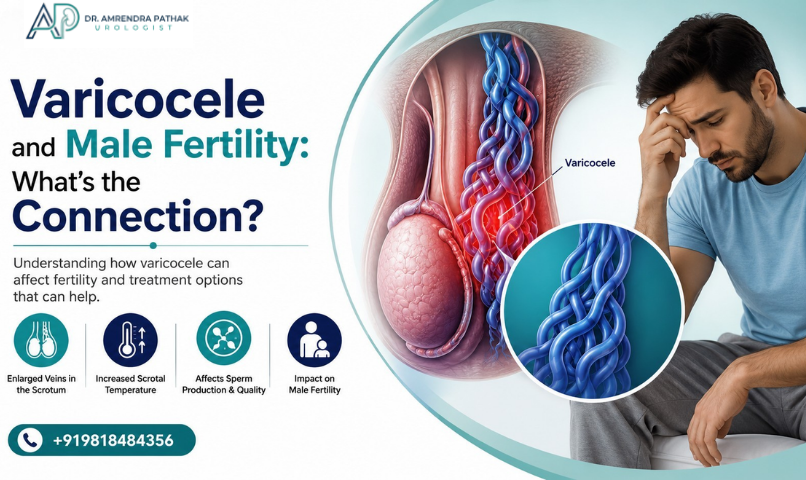
When couples struggle to conceive, the conversation often centres around the woman. But male infertility accounts for nearly half of all infertility cases worldwide — and one of the most common, yet most overlooked, causes is a condition called varicocele. If you or your partner has been diagnosed with it, or if you are simply trying to understand what it means for your future family plans, this guide breaks it down clearly.
What Is a Varicocele?
A varicocele is an enlargement of the veins within the scrotum, similar to varicose veins that appear in the legs. These veins are part of the pampiniform plexus, a network that helps regulate the temperature of the testicles. When the valves inside these veins malfunction, blood pools instead of flowing efficiently, causing the veins to dilate and enlarge.
Varicoceles are found in approximately 15% of all men and in nearly 40% of men investigated for infertility. This striking difference tells us something important: while not every varicocele causes problems, many go undetected until a man starts trying to father a child.
How Does a Varicocele Affect Fertility?
The connection between varicocele and male fertility is well-established in urological research, though the exact mechanisms involve several overlapping factors.
Temperature Dysregulation: The testicles need to be kept slightly cooler than core body temperature to produce healthy sperm. The pampiniform plexus acts as a cooling system. When veins enlarge and blood pools, scrotal temperature rises — and even a small increase of 1–2°C is enough to impair sperm production, motility, and DNA integrity.
Oxidative Stress Pooled blood carries higher levels of reactive oxygen species (free radicals). These cause oxidative stress that directly damages sperm cells, reducing their ability to fertilise an egg and increasing the risk of DNA fragmentation, which can affect embryo quality even when fertilisation does occur.
Hormonal Disruption Varicoceles can impair Leydig cell function in the testes, reducing testosterone production. Lower testosterone not only affects sperm count but also impacts libido, energy levels, and overall reproductive health.
Reduced Sperm Parameters Men with varicoceles commonly show poor results across all key sperm metrics — low count (oligospermia), poor motility (asthenospermia), and abnormal morphology (teratospermia). In some cases, all three are affected simultaneously, a condition called OAT syndrome.
Grades of Varicocele
Not all varicoceles are equal. They are clinically graded on a scale of I to III:
Grade I — Small; only detectable by ultrasound or Valsalva manoeuvre.
Grade II — Medium; palpable on physical examination without the Valsalva manoeuvre.
Grade III — Large; visibly obvious through the scrotal skin, often described as a "bag of worms."
Higher-grade varicoceles generally have a greater impact on fertility, though even subclinical (undetectable by physical exam) varicoceles can affect sperm quality in some men.
Symptoms to Watch For
Many men with varicocele experience no symptoms at all, which is why it often goes undiagnosed for years. When symptoms do occur, they may include:
A dull, aching pain or heaviness in the scrotum, particularly after prolonged standing or physical activity
Visible or palpable enlarged veins in the scrotum
Testicular atrophy (shrinkage) over time
Unexplained infertility despite regular, unprotected intercourse
Men in Rajendra Nagar and surrounding areas experiencing any of these signs should not delay — early evaluation by the Best Urologist Doctor in Rajendra Nagar can prevent long-term damage to testicular function and fertility potential.
Diagnosis typically involves a physical examination and a scrotal Doppler ultrasound, which assesses the size and blood flow of the veins. A semen analysis is usually ordered simultaneously to evaluate the impact on sperm parameters. Hormonal blood tests measuring FSH, LH, and testosterone may also be requested.
Treatment Options
Varicocelectomy (Surgical Repair) The most common treatment is a microsurgical varicocelectomy, where the enlarged veins are surgically tied off to redirect blood flow through healthier vessels. Studies consistently show that this procedure improves sperm count and motility in a significant proportion of men, with pregnancy rates improving meaningfully post-surgery.
Percutaneous Embolisation: A minimally invasive, radiologically guided procedure where the affected veins are blocked using a catheter. It has a similar success rate to surgery with a shorter recovery time.
Observation:n For men with Grade I varicoceles and normal semen parameters, active monitoring without intervention may be recommended.
Patients across Rajendra Nagar, Patel Nagar, and nearby localities who are exploring treatment options should consult the Best Bladder Stone Doctor in Rajendra Nagar — many experienced urologists in the area manage both urological and andrological (male reproductive) conditions under one roof.
Does Treatment Always Restore Fertility?
Not always — but the odds are encouraging. Research shows that microsurgical varicocelectomy improves sperm parameters in approximately 60–70% of men, and natural conception rates improve significantly within 12 months of surgery. For couples pursuing IVF or IUI, treating the varicocele beforehand often improves outcomes and may reduce the number of assisted reproduction cycles needed.
The younger the patient and the shorter the duration of infertility, the better the prognosis post-treatment.
When Should You See a Specialist?
You should consult a urologist if:
You and your partner have been trying to conceive for over 12 months without success
A semen analysis reveals poor sperm parameters
You notice scrotal discomfort, heaviness, or visible veins
A routine examination reveals testicular size asymmetry
Men across areas like Rajendra Nagar, Karol Bagh, and Kirti Nagar benefit from consulting the Best Urologist Doctor in Rajendra Nagar early, before varicocele-related testicular damage becomes irreversible.
Conclusion
Varicocele is one of the most treatable causes of male infertility — yet it remains one of the most underdiagnosed. The connection between enlarged scrotal veins and compromised sperm health is scientifically clear, and effective, minimally invasive treatments exist that can meaningfully improve a man's chances of fathering a child.
If you have been diagnosed with varicocele, or if infertility concerns have led you to investigate further, do not wait. Early intervention produces the best outcomes. Residents of Rajendra Nagar and surrounding areas can consult the Best Bladder Stone Doctor in Rajendra Nagar — a skilled urologist equipped to assess, diagnose, and treat varicocele with precision and care.
Male fertility is not a topic to be embarrassed about — it is a medical condition, and it deserves medical attention.
FAQs
Q1.Can an avaricocele go away on its own?
No. Varicoceles do not resolve without treatment. However, not all varicoceles require intervention — your urologist will advise based on grade and symptoms.
Q2. Is varicocele surgery painful?
Microsurgical varicocelectomy is performed under anaesthesia. Post-operative discomfort is usually mild and manageable with standard pain relief for a few days.
Q3. How long after surgery can fertility improve?
Sperm parameters typically begin improving within 3 months of surgery, with the most significant gains seen at the 6–12 month mark.
Q4. Can both testicles be affected?
Yes. Bilateral varicoceles occur in about 10–15% of cases, though the left side is far more commonly affected due to differences in venous anatomy.
Q5. Is varicocele linked to testicular cancer?
No direct causal link exists. However, any new scrotal mass or abnormality should always be evaluated by a urologist to rule out other conditions.